


Venice’s Canal Grande (Grand Canal) – also known by Venetians as Canalazzo – is the major water-traffic corridor sweeping through this amazing city.
Specifics
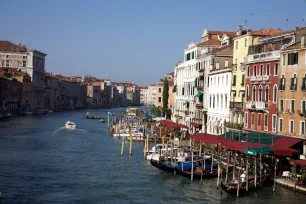
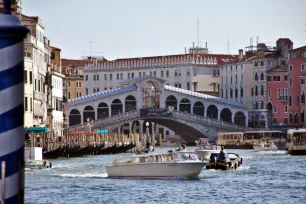
The Canal Grande snakes through the city of Venice in a large S shape, traveling from the Saint Mark Basin on one end to a lagoon near the Santa Lucia rail station on the other. This ancient waterway measures 3,800 meters (2.36 miles) long and ranges from 30 to 90 meters (about 100-300 feet) wide. In most places, the canal is approximately 5 meters (16 feet) deep.
The canal is an ancient waterway, lined with buildings – about 170 in all – that were mostly built from the thirteenth to the eighteenth centuries. Most were constructed by wealthy Venetian families.
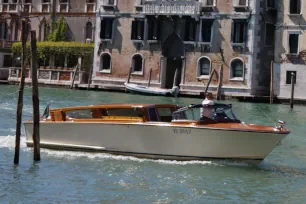
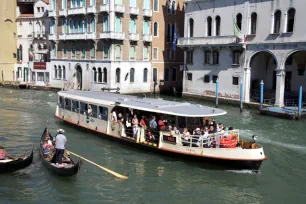
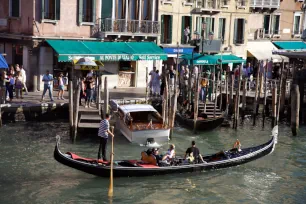
The majority of the city’s traffic cruises up and down the canal, be it private boats, vaporetti (water buses), water taxis or the famous gondolas. Foot traffic gathers around three famous bridges that cross the canal: the Rialto Bridge, the Ponte Degli Scalzi, and the Ponte dell’Accademia. A fourth, modern (and controversial) bridge was recently added not far from the Scalzi bridge: the Calatrava Bridge.
A Brief History
It is believed that the Grand Canal follows the course of an ancient river. One of the first settlements in the area grew along the canal, around the area of the current Rialto Bridge.
By the tenth century, it was a center for trade and a safe, ship-accessible port. Because of this, some of the earliest houses along the canal belonged to merchants who did their business on the seas.
By the twelfth and thirteenth centuries, homes along the canal became much more ornate and often included Byzantine-style decoration like elongated arches and large loggias. This Venetian-Byzantine style of architecture is evident in the oldest building along the canal, the Ca’ da Mosto, which is a thirteenth-century palazzo.
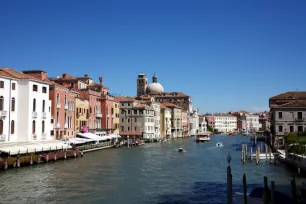
The Venetian-Gothic style of architecture began to appear in buildings constructed along the Grand Canal in the fifteenth century, and some of the best examples can still be found there, including the magnificent Ca d’Oro (House of Gold). During this period, facades included plaster in bright colors, pointed arches were popular, and columns were skinnier than before.
Buildings and homes designed in the Renaissance and Classical styles arrived in the sixteenth century. Many featured white facades rather than colored ones, and windows touted round rather than pointed arches. Examples of those styles of architecture include the Palazzo Dario and the Palazzo Grimani.
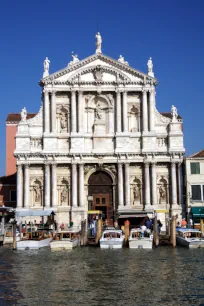
In the late sixteenth century and into the seventeenth century, Baroque-style buildings were added to those that already fronted the Canal Grande. This was the most prolific era of building activity along the waterway, and included the addition of the Santa Maria di Nazareth Church (known today as Scalzi) and the Santa Maria della Salute Basilica, one of the city’s most elegant ecclesiastic structures. Baldassarre Longhena was the major architect of that era, and he added many new buildings to the canal area.
By the eighteenth century, building along the Grand Canal had pretty much come to a halt.
However, during the last two centuries, significant renovations have been completed for many of the city’s historic canal-front buildings and the most important ones have become museums or are owned by foundations that see to their upkeep.
Regata Storica
The glorious past of Venice returns once a year to the Grand Canal during the Regata Storica (historical regatta) on the first sunday of September. The first of these regattas – boat races – were held here in the fourteenth century. The races are preceded by a spectacular boat parade, led by the Serenissima, a sumptuously decorated boat. The regatta is one of Venice’s yearly highlights, attracting throngs of tourists who admire the many historic boats with crews in traditional clothing.
Traveling on the Grand Canal
The best way to view the magnificent buildings along the Grand Canal, of course, is to travel by vaporetto (water bus) from one end to the other. (The #1 or #2 both travel from end to end.) Many tourists also take advantage of a romantic gondola ride along the waterway, which is an especially memorable way to experience the Canal Grande. Another option is to take one of the many water taxis.