
Toronto attractions listed by popularity
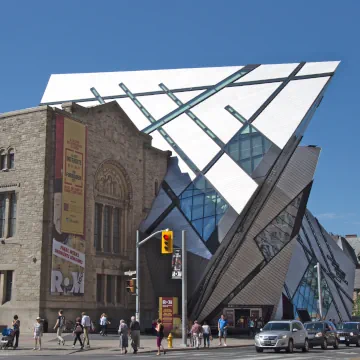
Toronto's largest museum covers world cultures and natural history in a historic building that mixes grand old architecture with spectacular modernism.
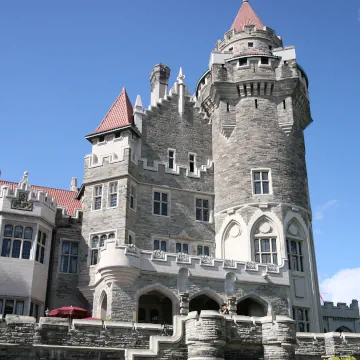
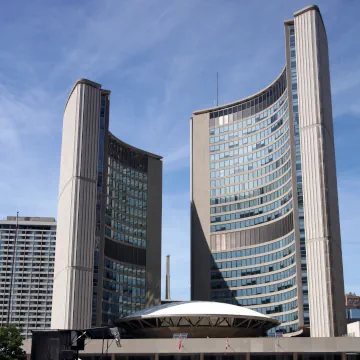
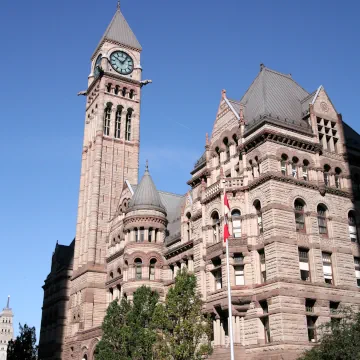
Toronto's old city hall was built between 1889 and 1899. Plans to demolish the structure in the 1960s were set aside when a group of citizens convinced the city to preserve the historic landmark.
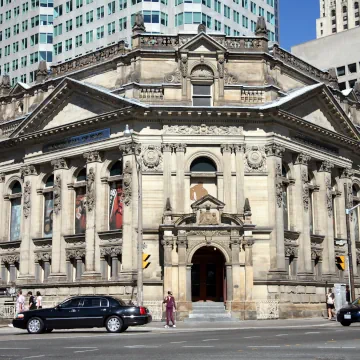
Canada's favorite game is celebrated in the Hockey Hall of Fame, where visitors find memorabilia and trophies such as the Stanley Cup. There are also opportunities to test your own hockey skills.
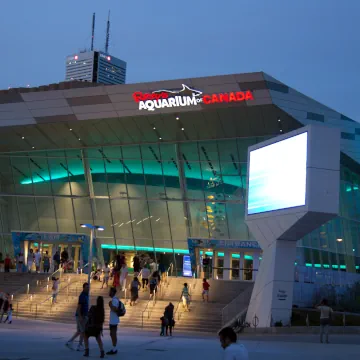
The aquarium of Canada is home to some 450 different marine species. Its most popular attraction is the shark tunnel, which allows visitors to be surrounded by numerous sharks and other marine animals.
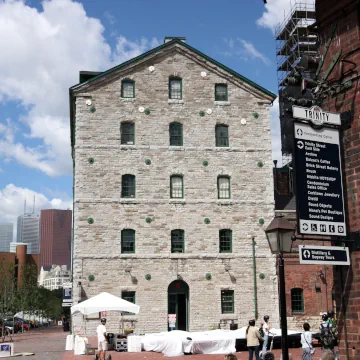
Now a culture and entertainment district, the area boasts the largest and best preserved collection of Victorian Industrial architecture in North America.
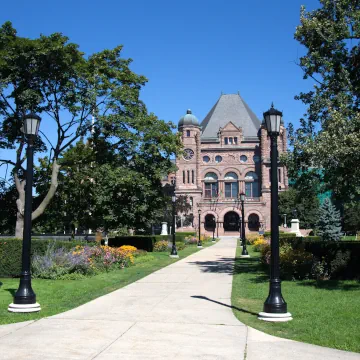
Queen's Park is one of Canada's oldest urban parks, originally created in 1860 in English style. The statue-littered park is now home to Ontario's Legislative Building.
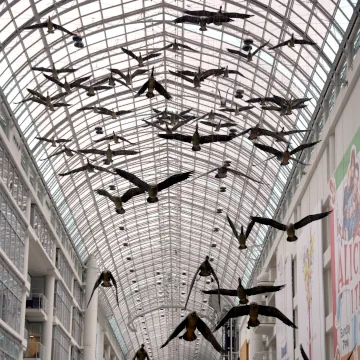
Eaton Centre is a colossal mall covering several blocks in the heart of Toronto. The six stories high glass-domed mall is part of Toronto's underground network known as PATH.
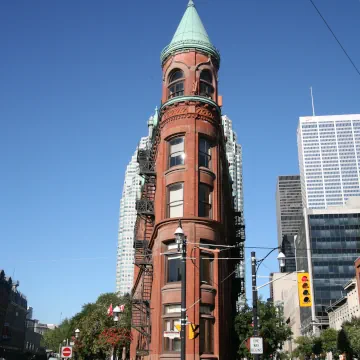
Due to its triangular ground plan, this five-story red brick building is known as the Flatiron. It was built in 1891, ten years before its more famous namesake was built in New York City.
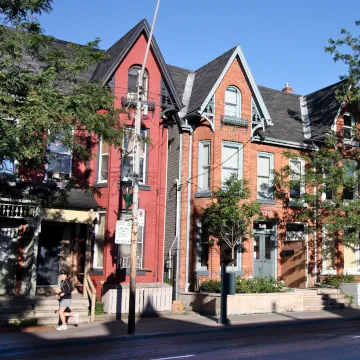
Cabbagetown is a historic neighborhood close to downtown Toronto. Once one of the poorest areas in the city, today it boasts numerous beautiful Victorian houses.
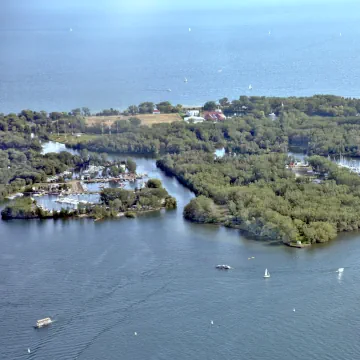
This large recreational area with beaches, an amusement park and yacht club consists of a small cluster of islands just a ferry ride away from Toronto's downtown.
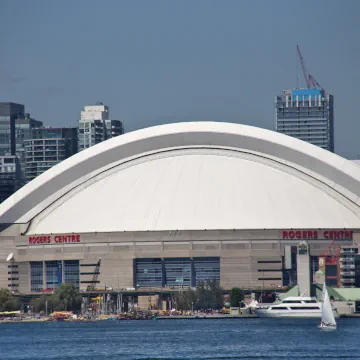
Rogers Centre, Toronto's impressive downtown stadium, opened in 1989 as the Skydome. It boasts a 95 meter high fully retractable roof that can be opened or closed in 20 minutes.
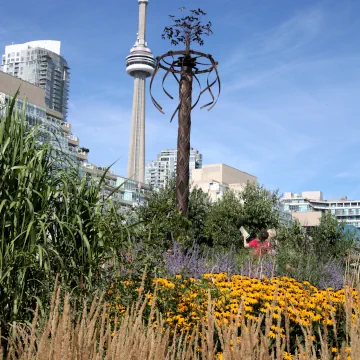
Toronto's Music Garden is a beautifully designed garden near the waterfront. The garden's design is inspired by a cello piece by Johann Sebastian Bach.
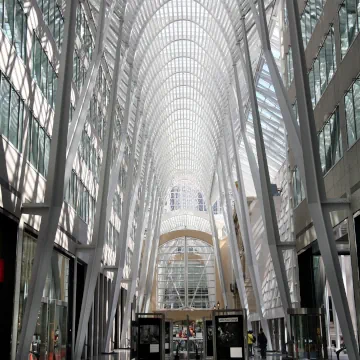
Brookfield Place, an office complex in downtown Toronto is best known for its magnificent glass-covered galleria, dubbed the crystal cathedral of commerce.
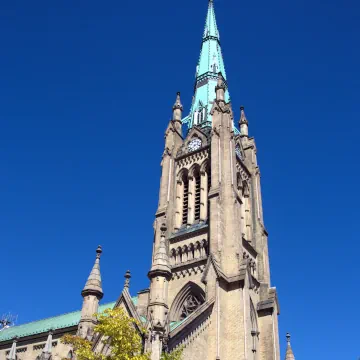
The Cathedral Church of St. James was built in the nineteenth century in a Neo-Gothic style. The church has beautiful stained-glass windows and on Sundays, you can hear a concert of change-ringing bells.
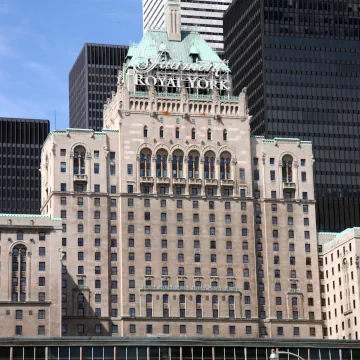
The Royal York Hotel is one of Toronto's most famous landmarks. When the hotel was built in 1929, this 28-story building was the tallest in the British Empire.
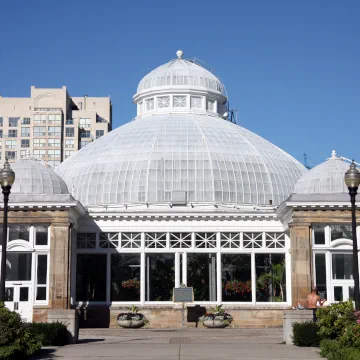
This four-hectare-large park (10 acres) is one of the oldest in the city and the first designated civic park in Toronto. Its centerpiece is an ornate complex of glass-and-metal greenhouses.
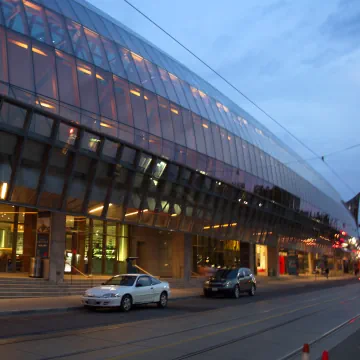
The Art Gallery of Ontario is one of Canada's most important museums, with particularly impressive holdings of Canadian Art, aside from a varied assortment of European, African and even Oceanic art.
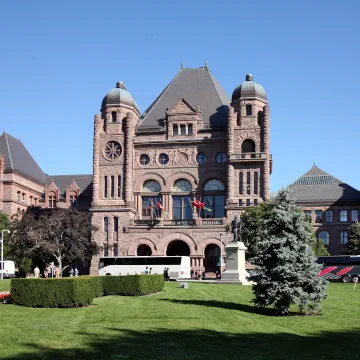
Located at the center of Queen's Park, the Ontario Legislative Building is the seat of the province's parliament. It was built in 1893 in Richardsonian Romanesque style.
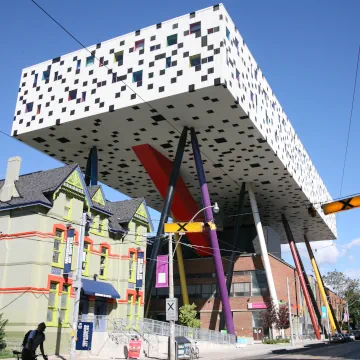
This bizarre looking building was built in 2004 as an addition to the Ontario College of Art. Designed by Will Alsop, the playful slab rests on a series of colorful slanting stilts.
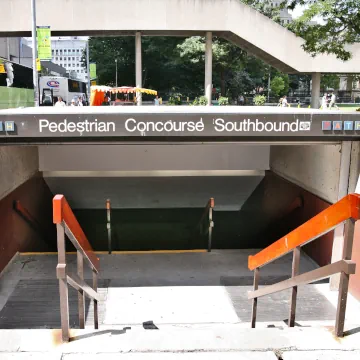
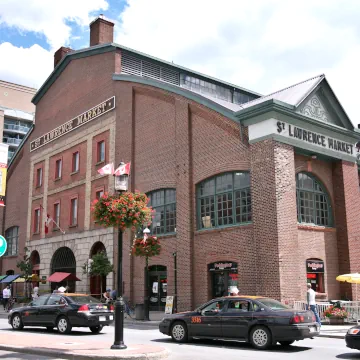
The South building of St. Lawrence Market was Toronto's first city hall from 1845 until 1899. Today, the structure is mainly used as a covered market hall.

The Church of the Holy Trinity is a charming little church built in 1847 in a Neo-Gothic style. The interior - in particular the stained-glass windows - is certainly worth a look.

Toronto's Union Station - a monumental building in Beaux-Arts style - was Canada's largest railway station when it was completed in 1921. It opened six years later, in 1927.

On the expansive campus of the University of Toronto in the center of the city you'll find a large number of notable buildings in a diverse array of architectural styles.

Replacing a former parking lot, this small but innovative modern park pays tribute to various Canadian landscapes. Its most striking feature is an imposing rock from Ontario's Lake Region.

The Toronto Dominion Centre is a complex of sleek black skyscrapers designed in the mid 1960s by the renowned 20th-century architect Ludwig Mies van der Rohe.

Toronto attractions listed alphabetically
This four-hectare-large park (10 acres) is one of the oldest in the city and the first designated civic park in Toronto. Its centerpiece is an ornate complex of glass-and-metal greenhouses.
The Art Gallery of Ontario is one of Canada's most important museums, with particularly impressive holdings of Canadian Art, aside from a varied assortment of European, African and even Oceanic art.
Brookfield Place, an office complex in downtown Toronto is best known for its magnificent glass-covered galleria, dubbed the crystal cathedral of commerce.
Cabbagetown is a historic neighborhood close to downtown Toronto. Once one of the poorest areas in the city, today it boasts numerous beautiful Victorian houses.
The Church of the Holy Trinity is a charming little church built in 1847 in a Neo-Gothic style. The interior - in particular the stained-glass windows - is certainly worth a look.
Now a culture and entertainment district, the area boasts the largest and best preserved collection of Victorian Industrial architecture in North America.
Eaton Centre is a colossal mall covering several blocks in the heart of Toronto. The six stories high glass-domed mall is part of Toronto's underground network known as PATH.
Due to its triangular ground plan, this five-story red brick building is known as the Flatiron. It was built in 1891, ten years before its more famous namesake was built in New York City.
Canada's favorite game is celebrated in the Hockey Hall of Fame, where visitors find memorabilia and trophies such as the Stanley Cup. There are also opportunities to test your own hockey skills.
Toronto's Music Garden is a beautifully designed garden near the waterfront. The garden's design is inspired by a cello piece by Johann Sebastian Bach.
Toronto's old city hall was built between 1889 and 1899. Plans to demolish the structure in the 1960s were set aside when a group of citizens convinced the city to preserve the historic landmark.
Located at the center of Queen's Park, the Ontario Legislative Building is the seat of the province's parliament. It was built in 1893 in Richardsonian Romanesque style.
Queen's Park is one of Canada's oldest urban parks, originally created in 1860 in English style. The statue-littered park is now home to Ontario's Legislative Building.
The aquarium of Canada is home to some 450 different marine species. Its most popular attraction is the shark tunnel, which allows visitors to be surrounded by numerous sharks and other marine animals.
Rogers Centre, Toronto's impressive downtown stadium, opened in 1989 as the Skydome. It boasts a 95 meter high fully retractable roof that can be opened or closed in 20 minutes.
Toronto's largest museum covers world cultures and natural history in a historic building that mixes grand old architecture with spectacular modernism.
The Royal York Hotel is one of Toronto's most famous landmarks. When the hotel was built in 1929, this 28-story building was the tallest in the British Empire.
This bizarre looking building was built in 2004 as an addition to the Ontario College of Art. Designed by Will Alsop, the playful slab rests on a series of colorful slanting stilts.
The Cathedral Church of St. James was built in the nineteenth century in a Neo-Gothic style. The church has beautiful stained-glass windows and on Sundays, you can hear a concert of change-ringing bells.
The South building of St. Lawrence Market was Toronto's first city hall from 1845 until 1899. Today, the structure is mainly used as a covered market hall.
The Toronto Dominion Centre is a complex of sleek black skyscrapers designed in the mid 1960s by the renowned 20th-century architect Ludwig Mies van der Rohe.
This large recreational area with beaches, an amusement park and yacht club consists of a small cluster of islands just a ferry ride away from Toronto's downtown.
Toronto's Union Station - a monumental building in Beaux-Arts style - was Canada's largest railway station when it was completed in 1921. It opened six years later, in 1927.
On the expansive campus of the University of Toronto in the center of the city you'll find a large number of notable buildings in a diverse array of architectural styles.
Replacing a former parking lot, this small but innovative modern park pays tribute to various Canadian landscapes. Its most striking feature is an imposing rock from Ontario's Lake Region.