


The terrace of the Pincio Gardens is one of the greatest places from which to enjoy Rome’s picturesque sunsets. There are also some interesting sights in the gardens, such as a water clock and an obelisk.
History of the Gardens
The Pincio Gardens (a.k.a. Pincian Gardens) actually date back to antiquity. The name of the park comes from the former villa of the Pincii family, who lived here in the fourth century. Later the hill was used as the vineyard of the monastery of Santa Maria del Popolo.
What you’ll see when you visit them today is a more modern nineteenth-century version, separated from the nearby Villa Borghese gardens by the ancient Aurelian Wall. With orders from Napoleon, Italian architect Giuseppe Valadier laid out the gardens from 1810 until 1818 in a classical style; a style more formal than the traditional terraced gardens of Rome.
Exploring Pincio Gardens
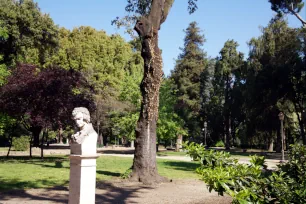
While the plants and flowers of the gardens are quite lovely and vary with the seasons, what most visitors enjoy about Pincio Gardens is the vast number of nineteenth-century busts of famous Italians (and other Europeans) that line the pathways. There are 228 in all, and they are – sadly – in various states of disrepair. Nonetheless, they can still be enjoyed on a stroll through the garden and their broken noses and sometimes graffitied pedestals are easily ignored by most visitors, though park maintenance people do their best to keep up with the damage.
Obelisk
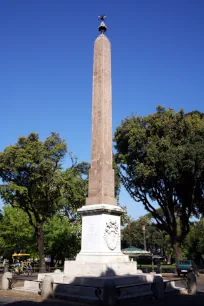
An obelisk, which is situated in the center of the gardens, is believed to be an early Roman copy, commissioned in the second century AD by the Emperor Hadrian as a tribute to his dead favorite friend and lover Antinoüs. The obelisk was probably erected at Hadrian’s Villa in Tivoli. Pope Pius VII placed the obelisk here in the gardens in 1822.
Water Clock
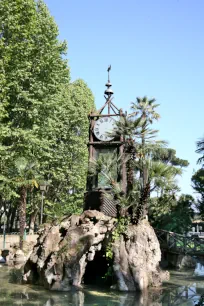
Visitors can also view a unique water clock (orologio ad acqua), built in 1867 by a Dominican, father Giovanni Embriaco. The water clock was one of the attractions at the Paris Universal Expo held that same year. In 1872 another model of Embracio’s water clock was installed in the Pincio Gardens at the Viale dell’Orologio.
Panoramic View
Probably the greatest thing about visiting Pincio Gardens, however, is the panoramic view of the city it provides from the balustraded Pincio Terrace at the Piazzale Napoleone I as it stretches out over the Piazza del Popolo. Try to arrive around sunset, when the view is by far the most stunning.
- Next: St. Mary Major
- More Sights & Attractions in Rome