


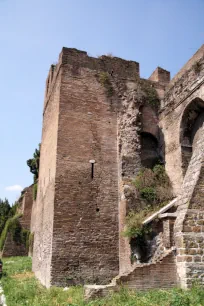
The Aurelian Wall is a large defensive wall that was built in the third century AD to protect Rome against attacks. The wall encircled the city’s seven hills and incorporates a number of large historic structures.
The Need for a Wall
After nearly five centuries of unopposed domination, Emperor Aurelian of Rome (270-275 AD) recognized the threat from Germanic tribes near the borders of the Roman Empire, and in 271 AD he decided the city needed a defensive wall to protect it against possible invaders.
The city had long outgrown its old Republican Wall, built in the late fourth century BC to replace an even older wall. From the first century BC until the third century AD, Rome’s military power was so strong that the city did not feel the need for a protective wall.
Building a Wall
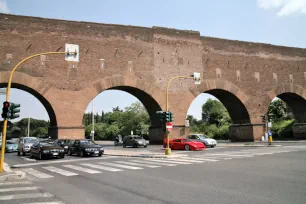
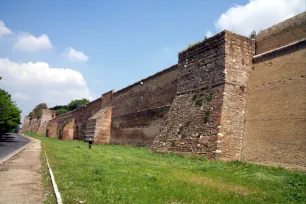
The Aurelian Wall was originally nineteen kilometers long (twelve miles) and about six to eight meters high (twenty feet). It had 3.5 meter thick walls (eleven feet). The wall included a square tower about every thirty meters (about one hundred feet), 381 in total. It also featured eighteen grand gates, including the Porta Latina and Porta San Sebastiano, which were protected by semicircular towers.
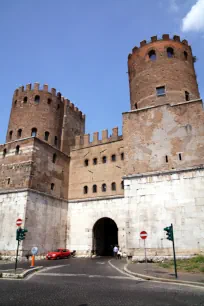
The wall was completed by Probus, the successor of Emperor Aurelian. Ultimately, it would be more than a hundred years before barbarians reached the city. But despite further improvements and the raising of the wall by Emperors Maxentius (fourth century) and Honorius (early fifth century), it failed to stop the barbarians and in 410 the city was pillaged by the Visigoths.
Incorporated Structures
Unique to the Aurelian Wall is the fact that several large monuments and buildings are incorporated into the structure. This was done to save time and allow the wall to be built at a lower cost.
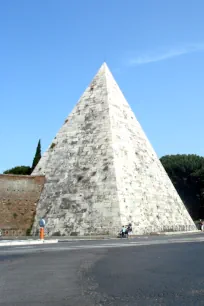
Existing buildings integrated within the wall include Castel Sant’Angelo, originally Hadrian’s Mausoleum; Amphitheatrum Castrense, a third century Roman amphitheater built of brick; the Pyramid of Cestius, an Egyptian-style pyramid built in 12 BC as a tomb for a wealthy praetor; and a section of the Aqua Claudia aqueduct, which was built to supply several of the Roman districts with water.
The Aurelian Wall Today
Today, about two-thirds of the Aurelian Wall remains intact and quite well-preserved. Interested visitors can head to the Museo delle Mura, near the San Sebastian gate (at Via di Porta San Sebastiano 18), to learn more about the history of the wall and what they’ll find on a tour of the structure. Some of the most monumental gates of the Aurelian Wall, such as the Porta Maggiore and Porta Asinaria are also worth a visit.