


The Louvre, originally a royal palace but now the world’s most famous museum, is a must-visit for anyone with a slight interest in art. Some of the museum’s most celebrated works of art include the Mona Lisa and the Venus of Milo.
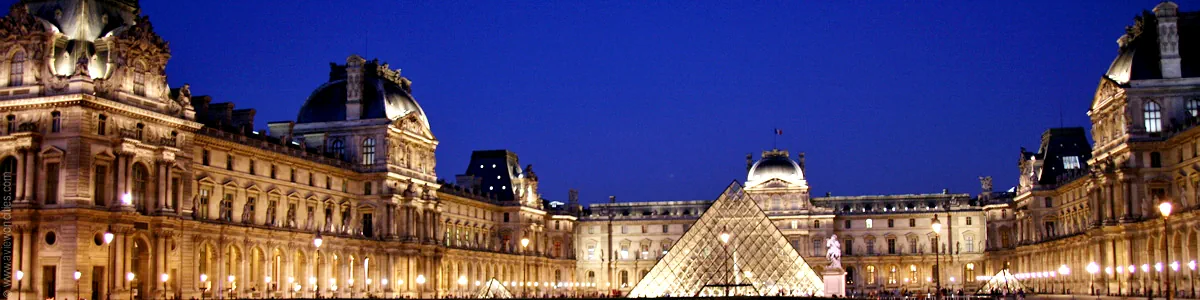
The Louvre Museum is one of the largest and most important museums in the world. It is housed in the expansive Louvre Palace, situated in the 1st arrondissement, at the heart of Paris.
Louvre Museum
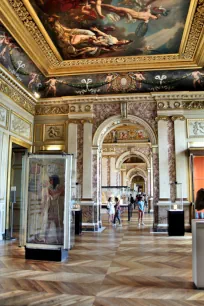
The collection of the Louvre Museum was first established in the sixteenth century as the private collection of King Francis I. One of the works of art he purchased was the now famous Mona Lisa painting. The collection grew steadily thanks to donations and purchases by the kings. In 1793, during the French Revolution, the Louvre became a national art museum and the private royal collection opened to the public.
The museum has a collection of over one million works of art, of which about 35,000 are on display, spread out over three wings of the former palace. The museum has a diverse collection ranging from the Antiquity up to the mid-nineteenth century.
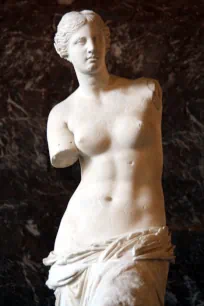
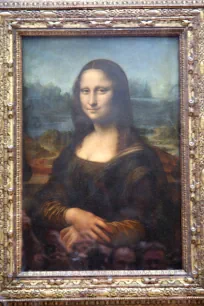
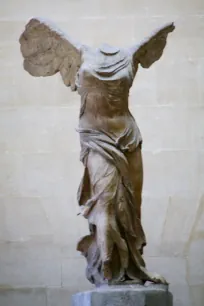
Some of the most famous works of art in the museum are the Venus of Milo, the Nike of Samothrace, the Dying Slave by Michelangelo and of course Leonardo da Vinci’s Mona Lisa.
After entering the museum through the Louvre Pyramid or via the Carrousel du Louvre, you have access to three large wings: Sully, Richelieu and Denon. Below, a brief description of the highlights in each wing.
Sully Wing
The Sully wing is the oldest part of the Louvre. The second floor holds a collection of French paintings, drawings and prints. One of the highlights is the erotic Turkish Bath, painted in the late eighteenth century by Jean-Auguste-Dominique Ingres.
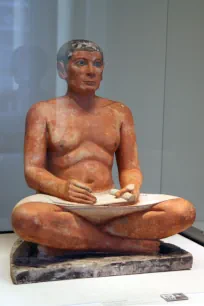
The first and ground floors of the Sully wing display works from the enormous collection of antiquities. In the thirty rooms with Egyptian antiquities you find artifacts and sculptures from Ancient Egypt such as the famous Seated Scribe and a colossal statue of Pharaoh Ramesses II. On the ground floor is the statue of Aphrodite, better known as the Venus of Milo, one of the highlights of the Louvre’s Greek collection.
For something completely different, you can go to the Lower ground floor of the Sully wing, where you can see some remnants of the medieval castle of the Louvre.
Richelieu Wing
Paintings from the Middle Ages up to the nineteenth century from across Europe are on the second floor of the Richelieu wing, including many works from master painters such as Rubens and Rembrandt. Some of the most notable works are the Lacemaker from Jan Vermeer and the Virgin of Chancellor Rolin, a fifteenth-century work by the Flemish painter Jan van Eyck. The first floor of the Richelieu wing houses a collection of decorative arts, with objects such as clocks, furniture, china and tapestries.
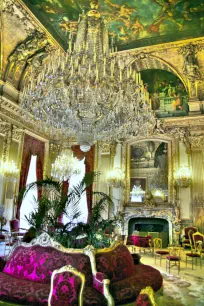
On the same floor are the sumptuously decorated Napoleon III Apartments. They give you an idea of what the Louvre interior looked like when it was still in use as a royal palace.
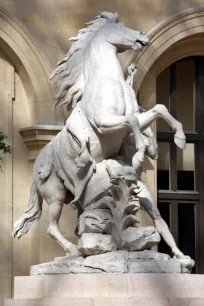
The ground and lower ground floor are home to the Louvre’s extensive collection of sculptures. They are arranged around two glass covered courtyards: Cour Puget and Cour Marly. The latter houses the Horses of Marly, large marble sculptures created in the eighteenth century by Guillaume Coustou. Nearby is the Tomb of Philippe Pot, supported by eight Pleurants (‘weepers’).
The ground floor also houses a collection of antiquities from the Near East. The main attraction here is the Code of Hammurabi, a large basalt stele from the eighteenth century BC, inscribed with the Babylonian law code.
Denon Wing
The Denon Wing is the most crowded of the three wings of the Louvre Museum; the Mona Lisa, a portrait of a woman by Leonardo da Vinci, on the first floor is the biggest crowd puller. There are other masterpieces, however, including the Wedding Feast at Cana from Veronese and the Consecration of Emperor Napoleon I by Jacques Louis David. Another star attraction of the museum is the Winged Victory of Samothrace (also known as the Nike of Samothrace), a Greek marble statue displayed at a prominent spot in the atrium connecting the Denon wing with the Sully wing.
The ground floor of the Denon wing houses the museum’s large collection of Roman and Etruscan antiquities, as well as a collection of sculptures from the Renaissance to the nineteenth century. Here you find Antonio Canova’s marble statue of Psyche Revived by Cupid’s Kiss. Even more famous is Michelangelo’s Dying Slave. On the same floor are eight rooms with artifacts from Africa, Asia, Oceania and the Americas. Medieval sculptures from Europe are displayed on the lower ground floor of the Denon wing.
History of the Louvre Palace

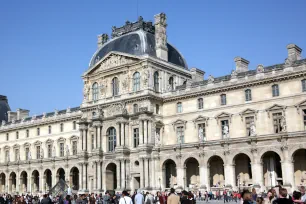
The Louvre was created in several phases. Originally built as a twelfth-century fortress by King Philip II, it was significantly expanded in the fourteenth century during the reign of King Charles V.
Its current palatial appearance goes back to the late fifteenth century, when the original fortress was demolished and the wing along the Seine river was built. The palace was extended during the sixteenth century by architect Pierre Lescot, who expanded the palace into a complex with two courtyards. A decade later, Catharina de Medici added the Tuileries Palace to the west of the Louvre. Construction on the Louvre was halted for some time when king Louis XIV decided to move to the Versailles Palace.
In the nineteenth century, during the Second Empire, the Louvre was expanded again with the addition of the Richelieu wing. The wings were extended even further westward during the Third Empire. The Louvre now had four symmetric wings surrounding a large courtyard. This would not last long, as the Communards burned the Tuileries Palace to the ground in 1871, opening up the west side of the palace towards the Tuileries Garden.
Louvre Pyramid
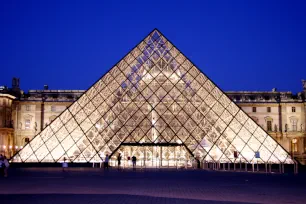
The most recent addition to the Louvre was the construction of the Louvre Pyramid, which functions as the museum’s main entrance. The pyramid was built in 1989 by the American modernist architect I.M. Pei. The glass pyramid allows the sunlight to enter the underground floor.
The modern addition originally received mixed reviews, as it contrasts sharply with the classical design of the surrounding buildings, but today it is generally accepted as a clever solution which has given the museum a spacious central entrance without the need to touch the historic patrimony.
- Next: Arc de Triomphe
- More Paris Museums
- More Sights & Attractions in Paris
- Related articles: