


The Avenue des Champs-Élysées is probably the most famous avenue in the world. This impressive street stretches from the Place de la Concorde to the Place Charles de Gaulle, the site of the Arc de Triomphe.
Orientation
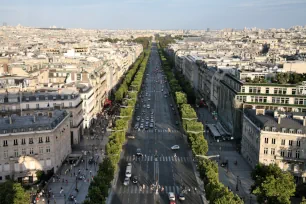
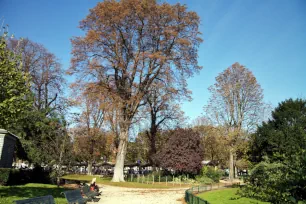
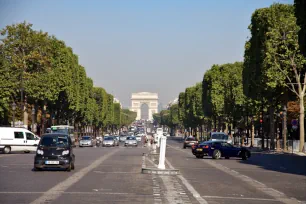
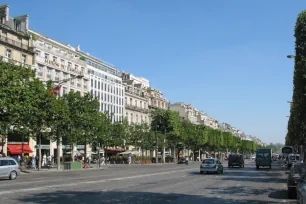
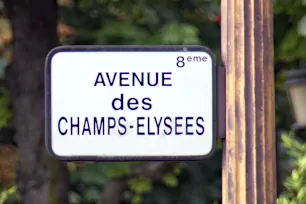
The Champs-Élysées is almost two kilometers long and seventy meters wide. At its western end the street is bordered by cinemas, theaters, cafés and luxury shops. On the opposite end, near the Place de la Concorde, the street is bordered by the Jardins des Champs-Élysées, beautifully arranged gardens with fountains and some grand buildings including the Grand and Petit Palais at the southern side and the Élysée at its northern side. The latter has been the residence of the French Presidents since 1873.
Celebrations
The Champs-Élysées is used for all the major celebrations. This is where Parisians celebrate New Year’s Eve and where the military parades are held on the 14th of July. Historic national events, like the Liberation at the end of the second World War or the victories in the World Cup football, were also celebrated on this wide avenue.
History
Seventeenth century – The Elysian Fields
In the sixteenth century, this area was nothing but fields outside the center of Paris. In 1616 Marie de Medicis decided to create a long tree-lined path going east from the Tuileries. The route was redesigned in 1667 by renowned landscape designer André Le Nôtre as an extension of the Jardins des Tuileries. The promenade, now called «Grande Allée du Roule» or «Grand-Cours» had become a fashionable place but was still isolated from the city with few buildings surrounding the area.
Twenty-seven years later, the promenade was renamed to «Champs-Élysées», or Elysian Fields in English. The name was derived from Greek mythology, where «Elusia» is a place where heroes come to relax.
Eighteenth & nineteenth centuries – Further Development
In 1724 the Champs-Élysées was extended all the way to the Chaillot hill (now known as l’Étoile, the site of the Arc de Triomphe). Its current form took shape in 1838 when French architect Ignaz Hittorf – who was redesigning the Place de la Concorde – created the Jardins des Champs-Élysées. He also installed sidewalks, gas lamps and fountains. The Champs-Élysées started to attract more and more restaurants and hotels, especially after 1900 when the Paris metro line no. 1 reached the Étoile station.
Towards a greener future
The latest redesign of the prestigious avenue was done in 1994 by Bernard Huet. The side lanes were converted into pedestrian zones, an underground parking lot was created, and new trees were planted. Cars now only occupy half the width of this grand avenue.
Ahead of the 2024 Olympic Games, the avenue is being renovated once again and more trees will be planted, but the real transformation will start after the Olympics when the aim is to turn the famous Avenue into a green oasis. The gardens will be significantly expanded in size and the avenue will be turned into a green promenade with priority given to pedestrians and bicycles. The project is expected to be completed by 2030.