
Munich attractions listed by popularity
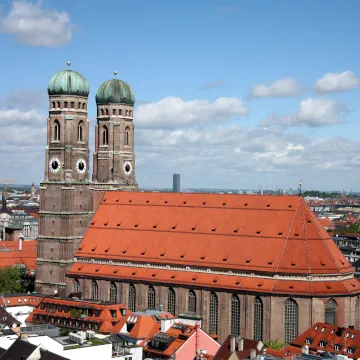
The Cathedral of our Lady or Frauenkirche is one of the best known landmarks in Munich. It was built between 1468 and 1488. The domes, typical for churches in Bavaria, were added later in 1525.
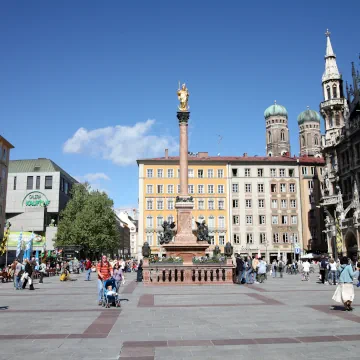
Marienplatz, a historic square in Munich, forms the heart of the city. Both the old town hall and the new town hall can be found here. The square, part of a pedestrian zone, is a popular place for street performers.
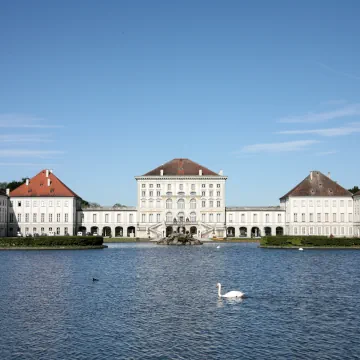
Schloss Nymphenburg is an expansive palace originally built in the 17th century and expanded throughout the 18th century. The palace is set in a large, formal-styled garden.
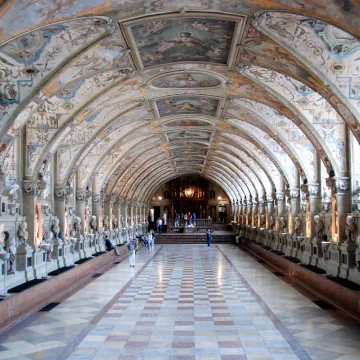
Currently, a large museum with more than a hundred rooms of artifacts, Munich’s Residenz Palace was the official home of Bavaria’s monarchs from 1385 to 1918.
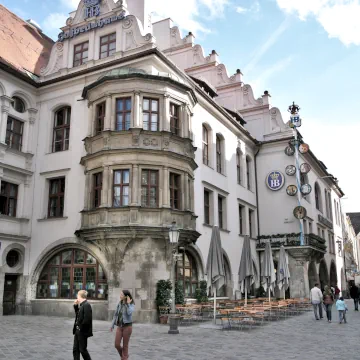
Munich's Hofbräuhaus - the world's most famous beer hall - was originally founded at the end of the 16th century. Today, it is one of the city's most popular attractions.
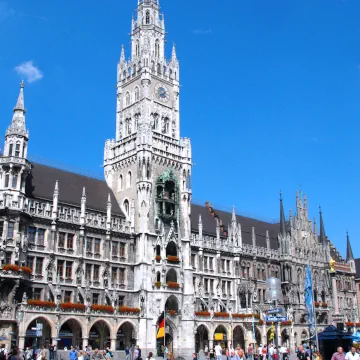
Munich's New Town Hall, famous for its Glockenspiel or carillon, is one of the city's most prominent landmarks. It was built between 1867 and 1909 after the Old Town Hall proved too small for the growing city.
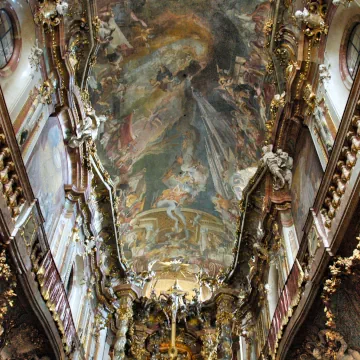
This small but opulent Baroque church was built as a private church by the Asam brothers in the 18th century. The neighboring Asamhaus (Asam House) is just as ornamented.
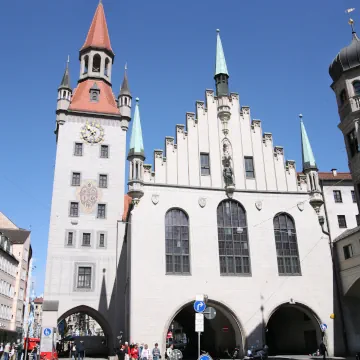
Munich's Old Town Hall was originally built in the 15th century in the Gothic style. After being destroyed during WWII, the building was restored following the original plans. It currently houses a toy museum.
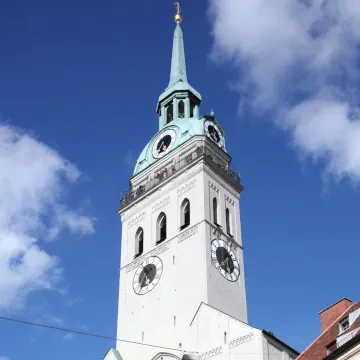
Built in 1180, St. Peter’s Church is the oldest in the city of Munich. The church features an observation platform from which you have great views over the city.
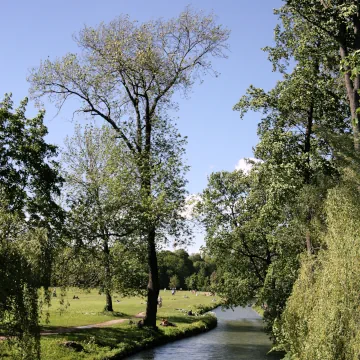
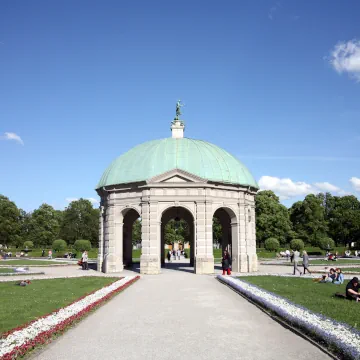
Europe's largest city park - a favorite among the locals - features two beer gardens, a Chinese Pagoda, a Japanese teahouse and a Greek-style temple.
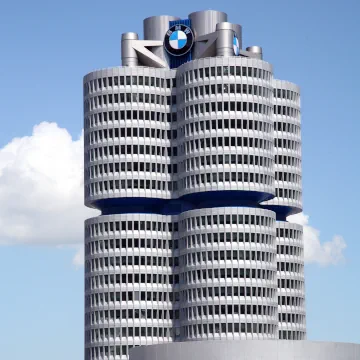
The BMW museum is housed in an annex of the famous car company's headquarters near the Olympiapark. The main building is modeled after a four-cylinder engine.
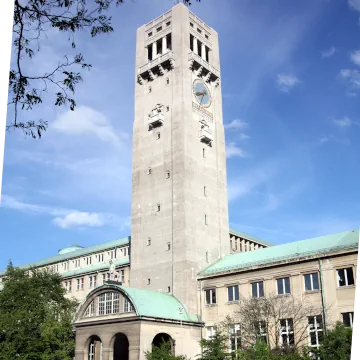
The Deutsches Museum is the largest technological museum of its kind. The exhibits cover topics ranging from mining and agriculture to telecommunication and aerospace.
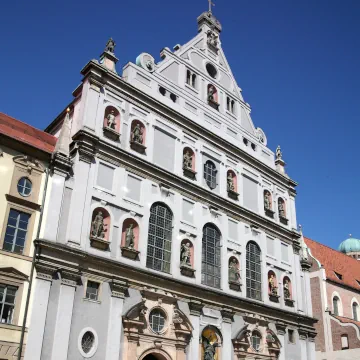
The Michaelskirche, built as a counter-reformation church, is the largest renaissance church north of the Alps. The 16th-century building boasts a massive barrel-vaulted roof.
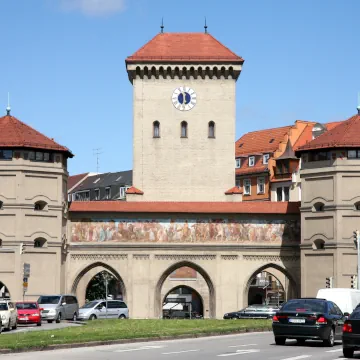
Three city gates remain of the original five gates that were part of the city fortifications around Munich: the Isartor, the Karlstor and the Sendlinger tor.
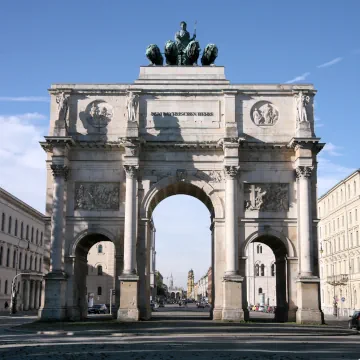
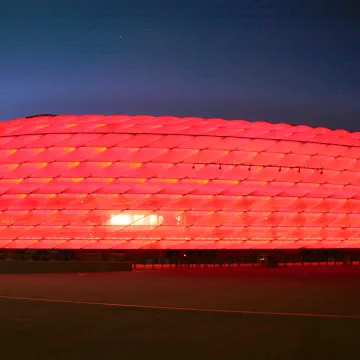
Built in 2005, this peculiarly-shaped stadium is made out of almost 3000 panels. Each one of the panels can be illuminated, resulting in a spectacular sight at night.
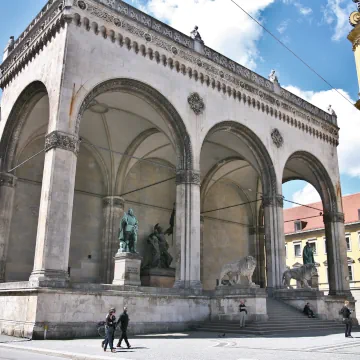
The Feldherrnhalle is a structure built between 1841 and 1844 in honor of the leaders of the Bavarian Army. It is adorned with bronze statues of some of the most revered generals of Bavaria.
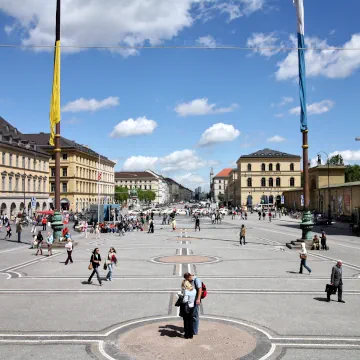
Odeonsplatz is an Italianesque square in Munich. Its Italian flair can be attributed to the surrounding buildings such as the Theatiner Church, Feldherrnhal and Hofgarten.
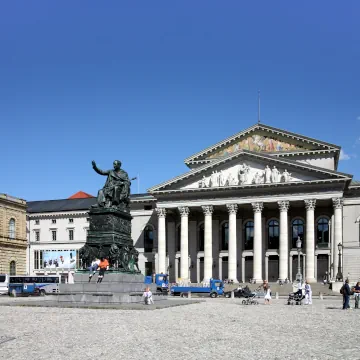
Max-Joseph-Platz is flanked by grand buildings created in the early 19th century by the court architect Leo von Klenze. Most impressive is the Nationaltheater, Munich's large opera house.
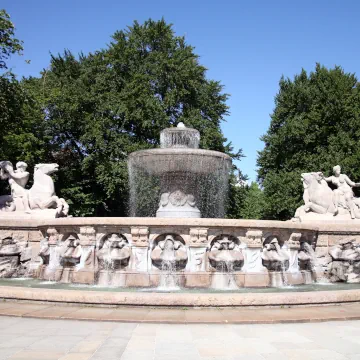
The monumental Wittelsbach Fountain was built at the end of the 19th century to commemorate the completion of Munich's water supply system. It shows two large statues symbolizing the benefits and danger of water.
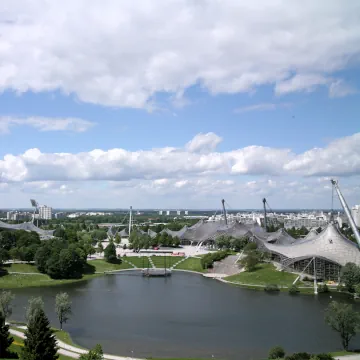
Olympiapark was the site of the 1972 Olympic Games in Munich. It is best known for the futuristic tent-like structures, in particular the Olympic Stadium.
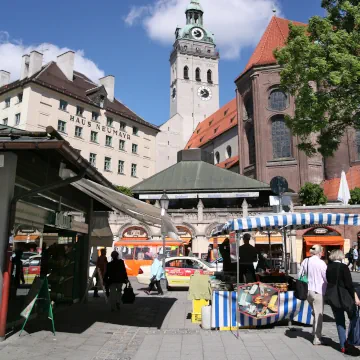
Munich's famous market is popular with locals and tourists alike. The lively market - often the site of festivals - boasts 140 stalls selling all sorts of foodstuff.
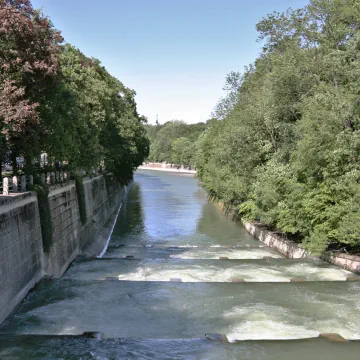

Königsplatz is a historic open square originally created as a 'forum for the arts'. The square is dominated by three classical Greek buildings. Two of these now house a collection of antiquities.

Alte Pinakothek is one of the world's most famous galleries, with an impressive collection of paintings from the 14th through the 18th century. The German, Flemish and Dutch Schools are especially well represented.

Ludwigstraße is Munich's most monumental boulevard, stretching from the Odeonsplatz near the Residenz Palace to the Siegestor, a Victory Gate.

Lenbachhaus is a renowned art gallery with an impressive collection of mostly 19th and 20th century works. The collection is housed in a 19th-century Tuscan style villa in the Kunstareal, Munich's Museum Quarter.

Karlsplatz is a square situated at the western end of Munich's inner city. It was laid out at the end of the 18th century, when the medieval walls encircling the city were torn down.

The Friedensengel or Angel of Peace is a monument erected at the end of the 19th century to celebrate the period of peace and stability after the end of the Franco-Prussian war of 1870-1871.


The Ruhmeshalle, or Hall of Fame, was erected in order to honor famous Bavarians who have left their mark on the fields of politics, science, and the arts.

This magnificent church was built in Italian Baroque style in the 17th century. It was built in celebration of the long-awaited birth of the new Prince, Max Emanuel.

The Maximilianeum is a grand Renaissance style building commissioned in the mid-19th century by King Maximilianeum II as the home of an 'institution of higher learning'.

The Heilig-Geist-Kirche (Church of the Holy Spirit) is one of the oldest churches in Munich. It has a magnificent interior decorated in Baroque style by the Asam brothers.

The Cuvilliés Theater is a magnificent Rococo theater with a lavish wooden interior. It was built in the mid-18th century as the opera house of the Residenz palace.

The early-20th-century Müllersches Volksbad is a public bath house set in a spectacular Art Nouveau decor. Today, the bathhouse is still open to visitors.

Karolinenplatz is a star-shaped square located close to the more monumental Königsplatz. The black obelisk at the center of the square honors 30,000 Bavarians who died in the 1812 campaign against Russia.

Kunstareal is a museum quarter in Munich, home to more than ten different museums, from picture galleries and ancient art museums to geology and natural history museums.

The Alte Münze (Old Mint) was built in the sixteenth century as a mews. The building was later converted into a mint, hence its name. It has a beautiful Renaissance courtyard, known as the Münzhof.
Munich attractions listed alphabetically
Built in 2005, this peculiarly-shaped stadium is made out of almost 3000 panels. Each one of the panels can be illuminated, resulting in a spectacular sight at night.
The Alte Münze (Old Mint) was built in the sixteenth century as a mews. The building was later converted into a mint, hence its name. It has a beautiful Renaissance courtyard, known as the Münzhof.
Alte Pinakothek is one of the world's most famous galleries, with an impressive collection of paintings from the 14th through the 18th century. The German, Flemish and Dutch Schools are especially well represented.
This small but opulent Baroque church was built as a private church by the Asam brothers in the 18th century. The neighboring Asamhaus (Asam House) is just as ornamented.
The BMW museum is housed in an annex of the famous car company's headquarters near the Olympiapark. The main building is modeled after a four-cylinder engine.
Three city gates remain of the original five gates that were part of the city fortifications around Munich: the Isartor, the Karlstor and the Sendlinger tor.
The Cuvilliés Theater is a magnificent Rococo theater with a lavish wooden interior. It was built in the mid-18th century as the opera house of the Residenz palace.
The Deutsches Museum is the largest technological museum of its kind. The exhibits cover topics ranging from mining and agriculture to telecommunication and aerospace.
Europe's largest city park - a favorite among the locals - features two beer gardens, a Chinese Pagoda, a Japanese teahouse and a Greek-style temple.
The Feldherrnhalle is a structure built between 1841 and 1844 in honor of the leaders of the Bavarian Army. It is adorned with bronze statues of some of the most revered generals of Bavaria.
The Cathedral of our Lady or Frauenkirche is one of the best known landmarks in Munich. It was built between 1468 and 1488. The domes, typical for churches in Bavaria, were added later in 1525.
The Friedensengel or Angel of Peace is a monument erected at the end of the 19th century to celebrate the period of peace and stability after the end of the Franco-Prussian war of 1870-1871.
The Heilig-Geist-Kirche (Church of the Holy Spirit) is one of the oldest churches in Munich. It has a magnificent interior decorated in Baroque style by the Asam brothers.
Munich's Hofbräuhaus - the world's most famous beer hall - was originally founded at the end of the 16th century. Today, it is one of the city's most popular attractions.
Karlsplatz is a square situated at the western end of Munich's inner city. It was laid out at the end of the 18th century, when the medieval walls encircling the city were torn down.
Karolinenplatz is a star-shaped square located close to the more monumental Königsplatz. The black obelisk at the center of the square honors 30,000 Bavarians who died in the 1812 campaign against Russia.
Kunstareal is a museum quarter in Munich, home to more than ten different museums, from picture galleries and ancient art museums to geology and natural history museums.
Königsplatz is a historic open square originally created as a 'forum for the arts'. The square is dominated by three classical Greek buildings. Two of these now house a collection of antiquities.
Lenbachhaus is a renowned art gallery with an impressive collection of mostly 19th and 20th century works. The collection is housed in a 19th-century Tuscan style villa in the Kunstareal, Munich's Museum Quarter.
Ludwigstraße is Munich's most monumental boulevard, stretching from the Odeonsplatz near the Residenz Palace to the Siegestor, a Victory Gate.
Marienplatz, a historic square in Munich, forms the heart of the city. Both the old town hall and the new town hall can be found here. The square, part of a pedestrian zone, is a popular place for street performers.
Max-Joseph-Platz is flanked by grand buildings created in the early 19th century by the court architect Leo von Klenze. Most impressive is the Nationaltheater, Munich's large opera house.
The Maximilianeum is a grand Renaissance style building commissioned in the mid-19th century by King Maximilianeum II as the home of an 'institution of higher learning'.
The Michaelskirche, built as a counter-reformation church, is the largest renaissance church north of the Alps. The 16th-century building boasts a massive barrel-vaulted roof.
The early-20th-century Müllersches Volksbad is a public bath house set in a spectacular Art Nouveau decor. Today, the bathhouse is still open to visitors.
Munich's New Town Hall, famous for its Glockenspiel or carillon, is one of the city's most prominent landmarks. It was built between 1867 and 1909 after the Old Town Hall proved too small for the growing city.
Schloss Nymphenburg is an expansive palace originally built in the 17th century and expanded throughout the 18th century. The palace is set in a large, formal-styled garden.
Odeonsplatz is an Italianesque square in Munich. Its Italian flair can be attributed to the surrounding buildings such as the Theatiner Church, Feldherrnhal and Hofgarten.
Munich's Old Town Hall was originally built in the 15th century in the Gothic style. After being destroyed during WWII, the building was restored following the original plans. It currently houses a toy museum.
Olympiapark was the site of the 1972 Olympic Games in Munich. It is best known for the futuristic tent-like structures, in particular the Olympic Stadium.
Built in 1180, St. Peter’s Church is the oldest in the city of Munich. The church features an observation platform from which you have great views over the city.
Currently, a large museum with more than a hundred rooms of artifacts, Munich’s Residenz Palace was the official home of Bavaria’s monarchs from 1385 to 1918.
The Ruhmeshalle, or Hall of Fame, was erected in order to honor famous Bavarians who have left their mark on the fields of politics, science, and the arts.
This magnificent church was built in Italian Baroque style in the 17th century. It was built in celebration of the long-awaited birth of the new Prince, Max Emanuel.
Munich's famous market is popular with locals and tourists alike. The lively market - often the site of festivals - boasts 140 stalls selling all sorts of foodstuff.
The monumental Wittelsbach Fountain was built at the end of the 19th century to commemorate the completion of Munich's water supply system. It shows two large statues symbolizing the benefits and danger of water.