
Milan attractions listed by popularity
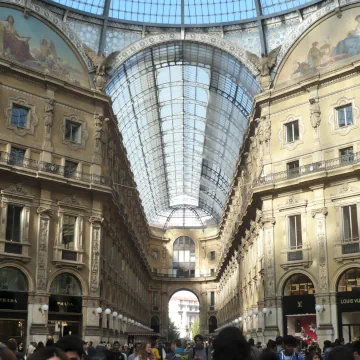
Architect Giuseppe Mengoni's masterpiece, an impressive glass and iron covered arcade, is one of the city's most famous attractions. Dubbed Milan's living room, it is always teeming with people.
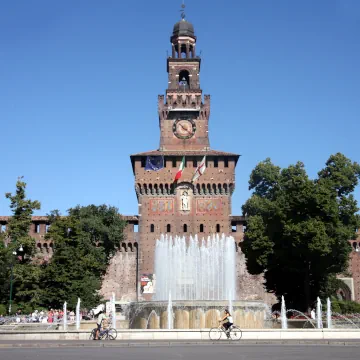
The Sforzesco Castle has long been a symbol of power from where local and foreign rulers reigned over the city. Today, the castle is home to a number of civic museums.
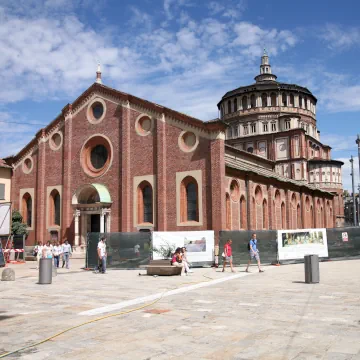
The Santa Maria delle Grazie is a magnificent church, built in a combination of Gothic and Renaissance styles. The Last Supper, Leonardo da Vinci's masterpiece, can be admired in the adjoining refectory.
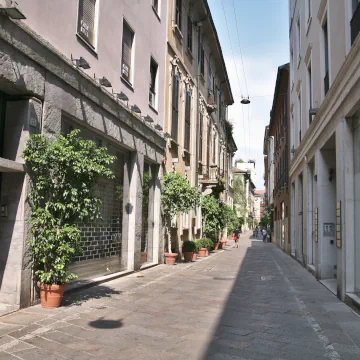
Milan has a reputation for its stylish fashion and chic boutiques, most of which can be found in the Quadrilatero della Mode, Milan's famous fashion district centered around the Via Montenapoleone.
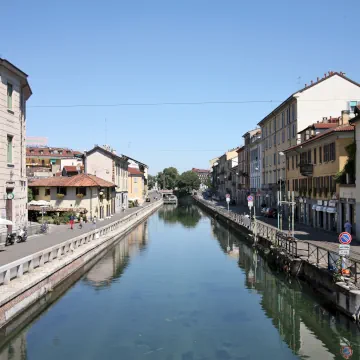
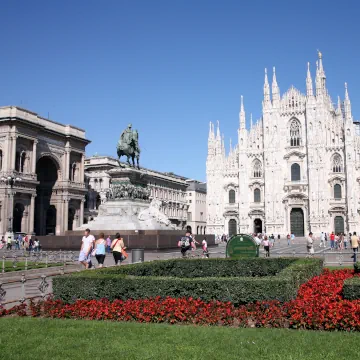
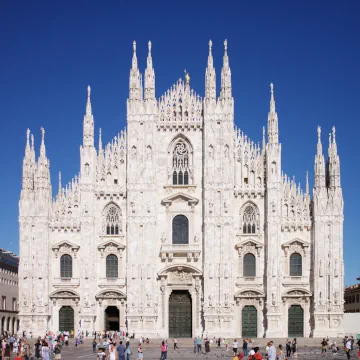
The Piazza del Duomo is a large square in the heart of Milan, dominated by the magnificent cathedral. An equestrian statue of Victor Emmanuel II - the first king of Italy - graces the center of the square.
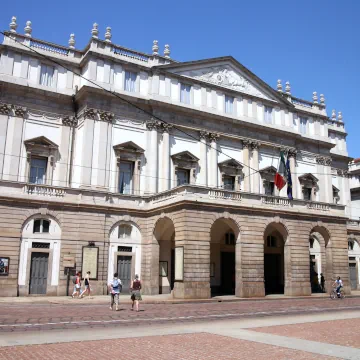
Teatro alla Scala, also simply known as La Scala, is one of the world's most prestigious opera houses. It was built in 1778 by Giuseppe Piermarini at the site of the Santa Maria della Scala church.
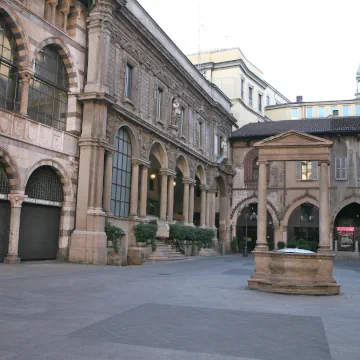
Piazza Mercanti is a picturesque, pedestrianized square in the heart of Milan. The area, which for five centuries was the city's governmental center, has retained much of its medieval charm.
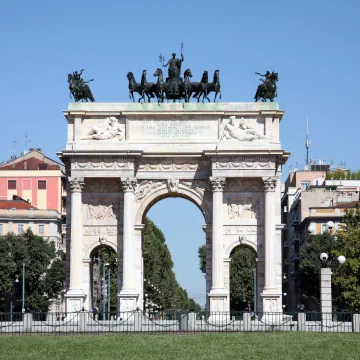
Construction of this triumphal arch, in honor of Napoleon's victories, started in 1807. After the French were ousted in 1814, the Habsburg rulers re-baptized the arch 'Arco della Pace', Arch of Peace.
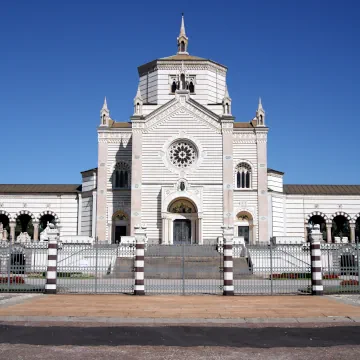
Cimitero Monumentale is a large cemetery, with, as its name implies, plenty of monumental tombs. In fact, there are so many quality sculptures and monuments, that it can best be described as an open-air museum.
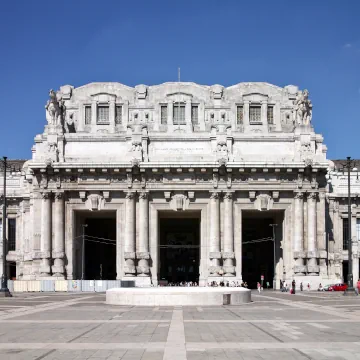
Milan's central station is a monumental structure built between 1912 and 1931 after a design by Italian architect Ulisse Stacchini. The architect took inspiration from the thermal complexes of the Roman Empire.
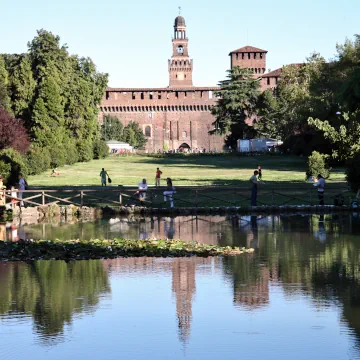
Originally the site of a hunting ground, the Sempione Park was laid out between 1890 and 1893 in a landscape style. Several historic structures can be found in the park, including a large triumphal arch.
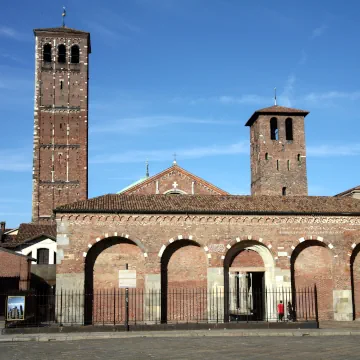
The Basilica di Sant'Ambrogio is the most important of several churches that were built during the tenure of bishop Ambrose during the 4th century. The remains of several saints, including Ambrose, are buried here.
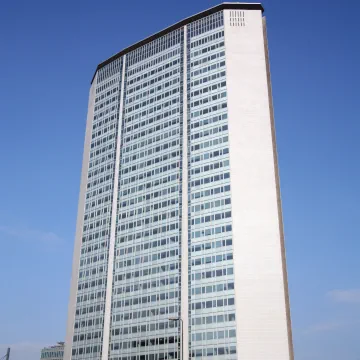
The slender Pirelli Tower was built between 1955 and 1959 as the headquarters of the Pirelli Company. The iconic skyscraper was the first to eclipse the height of the cathedral.
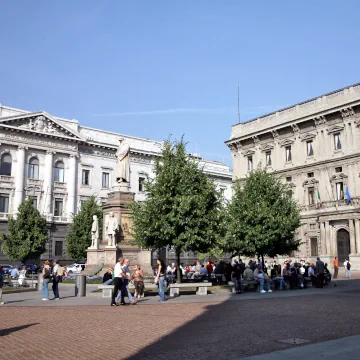
Piazza della Scala is a square named after the Theatro alla Scala, a theater building that overlooks the pedestrianized square. A central monument honors Leonardo da Vinci.
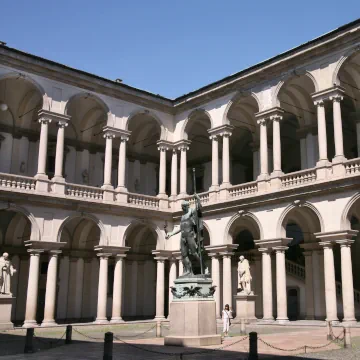
The Pinacoteca di Brera is an art gallery founded in 1809 by Napoleon. Over the centuries, the gallery's collection of mostly Italian paintings grew into one of the country's most important art collections.
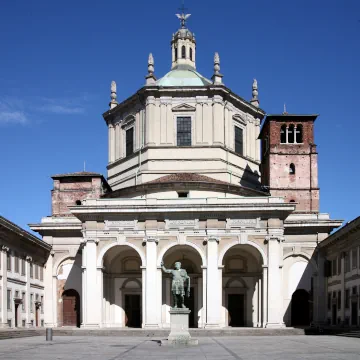
San Lorenzo Maggiore - also known as San Lorenzo alle Colonne - is one of the oldest churches in Italy. The chapel of Sant'Aguilino in the San Lorenzo church is decorated with early 5th century mosaics.
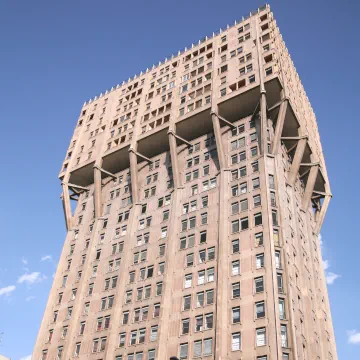
The Torre Velasca was built at the end of the 1950s as one of Milan's first skyscrapers. The tower's unusual shape recalls the medieval watchtowers that were once omnipresent in Lombardy.
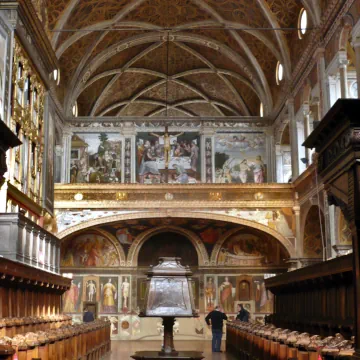
The church of San Maurizio has one of the most magnificent interiors of all churches in Milan. Its walls and chapels are completely covered with 16th century frescoes.
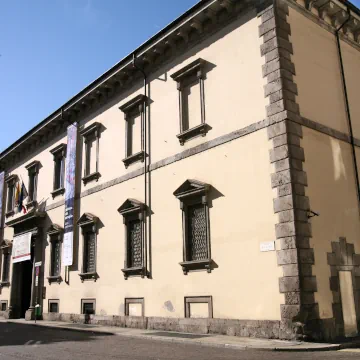
The Pinacoteca Ambrosiana is an art gallery founded in the early 17th century. The gallery is housed in the Palazzo dell'Ambrosiana, which is also home to the famous Ambrosian library.
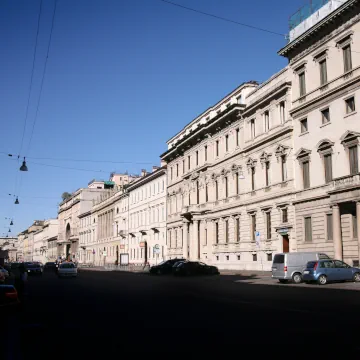
The Corso Venezia is one of the most famous streets in Milan, thanks to the upscale shops and boutiques and the magnificent palazzi that were built here from the 16th to the early 20th century.
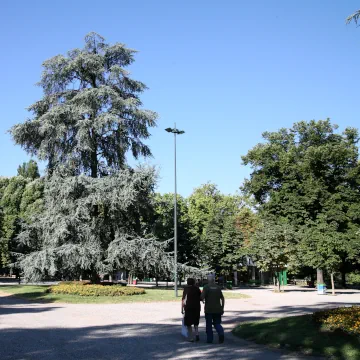
This English-style landscaped park was creating in the late 18th century by joining several orchards and gardens of monasteries. The park is adorned with statues of leading Milanese figures from the 19th century.
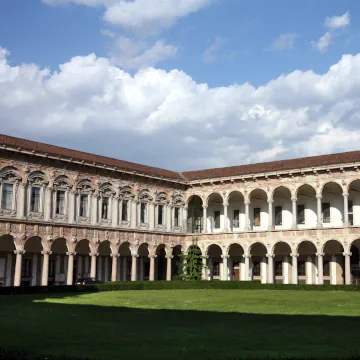
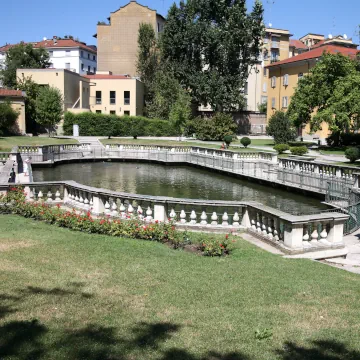
The Giardino della Guastalla is Milan's oldest garden. It was created in the mid-16th century as the garden of the Guastalla College. The garden features a beautiful Baroque pond.
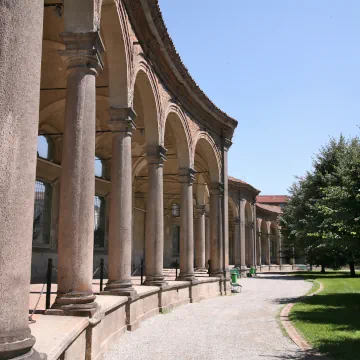
The Rotonda della Besana is a beautiful Baroque structure created in the early 18th century. It consists of a petal shaped arcade that encloses a garden with a central church.
Milan attractions listed alphabetically
Construction of this triumphal arch, in honor of Napoleon's victories, started in 1807. After the French were ousted in 1814, the Habsburg rulers re-baptized the arch 'Arco della Pace', Arch of Peace.
Milan's central station is a monumental structure built between 1912 and 1931 after a design by Italian architect Ulisse Stacchini. The architect took inspiration from the thermal complexes of the Roman Empire.
Cimitero Monumentale is a large cemetery, with, as its name implies, plenty of monumental tombs. In fact, there are so many quality sculptures and monuments, that it can best be described as an open-air museum.
The Corso Venezia is one of the most famous streets in Milan, thanks to the upscale shops and boutiques and the magnificent palazzi that were built here from the 16th to the early 20th century.
Milan has a reputation for its stylish fashion and chic boutiques, most of which can be found in the Quadrilatero della Mode, Milan's famous fashion district centered around the Via Montenapoleone.
Architect Giuseppe Mengoni's masterpiece, an impressive glass and iron covered arcade, is one of the city's most famous attractions. Dubbed Milan's living room, it is always teeming with people.
This English-style landscaped park was creating in the late 18th century by joining several orchards and gardens of monasteries. The park is adorned with statues of leading Milanese figures from the 19th century.
The Giardino della Guastalla is Milan's oldest garden. It was created in the mid-16th century as the garden of the Guastalla College. The garden features a beautiful Baroque pond.
Piazza Mercanti is a picturesque, pedestrianized square in the heart of Milan. The area, which for five centuries was the city's governmental center, has retained much of its medieval charm.
The Piazza del Duomo is a large square in the heart of Milan, dominated by the magnificent cathedral. An equestrian statue of Victor Emmanuel II - the first king of Italy - graces the center of the square.
Piazza della Scala is a square named after the Theatro alla Scala, a theater building that overlooks the pedestrianized square. A central monument honors Leonardo da Vinci.
The Pinacoteca Ambrosiana is an art gallery founded in the early 17th century. The gallery is housed in the Palazzo dell'Ambrosiana, which is also home to the famous Ambrosian library.
The Pinacoteca di Brera is an art gallery founded in 1809 by Napoleon. Over the centuries, the gallery's collection of mostly Italian paintings grew into one of the country's most important art collections.
The slender Pirelli Tower was built between 1955 and 1959 as the headquarters of the Pirelli Company. The iconic skyscraper was the first to eclipse the height of the cathedral.
The Rotonda della Besana is a beautiful Baroque structure created in the early 18th century. It consists of a petal shaped arcade that encloses a garden with a central church.
San Lorenzo Maggiore - also known as San Lorenzo alle Colonne - is one of the oldest churches in Italy. The chapel of Sant'Aguilino in the San Lorenzo church is decorated with early 5th century mosaics.
The church of San Maurizio has one of the most magnificent interiors of all churches in Milan. Its walls and chapels are completely covered with 16th century frescoes.
The Basilica di Sant'Ambrogio is the most important of several churches that were built during the tenure of bishop Ambrose during the 4th century. The remains of several saints, including Ambrose, are buried here.
The Santa Maria delle Grazie is a magnificent church, built in a combination of Gothic and Renaissance styles. The Last Supper, Leonardo da Vinci's masterpiece, can be admired in the adjoining refectory.
Originally the site of a hunting ground, the Sempione Park was laid out between 1890 and 1893 in a landscape style. Several historic structures can be found in the park, including a large triumphal arch.
The Sforzesco Castle has long been a symbol of power from where local and foreign rulers reigned over the city. Today, the castle is home to a number of civic museums.
Teatro alla Scala, also simply known as La Scala, is one of the world's most prestigious opera houses. It was built in 1778 by Giuseppe Piermarini at the site of the Santa Maria della Scala church.
The Torre Velasca was built at the end of the 1950s as one of Milan's first skyscrapers. The tower's unusual shape recalls the medieval watchtowers that were once omnipresent in Lombardy.