


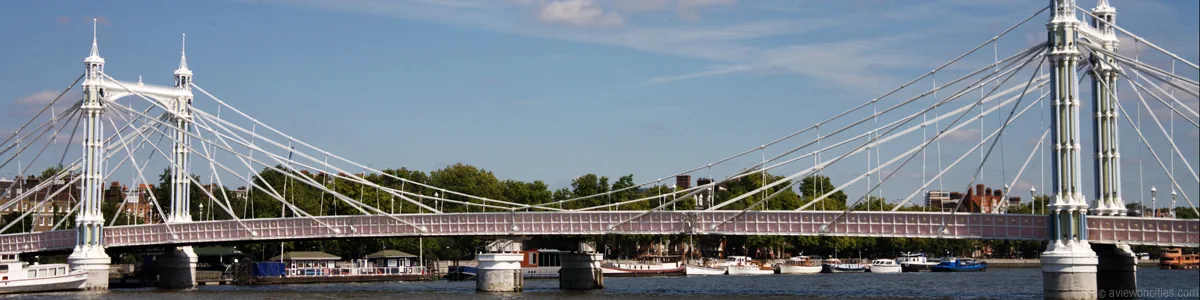
Crossing the River Thames between Chelsea and Battersea, Albert Bridge is a beautiful example of Victorian bridge architecture. It is not on most visitors’ itineraries, but well worth a visit for architecture enthusiasts.
About the Bridge
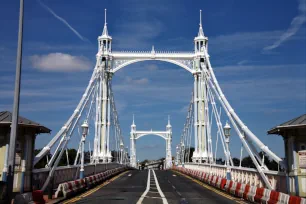
Named in memory of Prince Albert of Saxe-Coburg-Gotha, Prince Consort to Queen Victoria, the attractive Albert Bridge was built between 1870 and 1872. Designed by Rowland Mason Ordish, it was an excellent example of a rigid suspension bridge. It measures 216 meters long, 12.5 meters wide (700 ft by 41 ft) and has a center span of 122 meters (400 feet).
Renovation
Albert Bridge was renovated and strengthened just a dozen years after its completion and was made to more closely resemble a cable-stayed bridge, which consists of one or more columns/towers with cable stays supporting the bridge deck. Sir Joseph Bazelgette designed the alterations to the structure.
Saving the Bridge
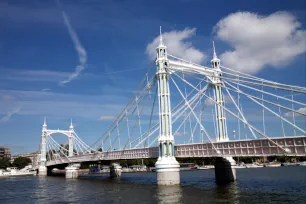
After World War II, the bridge was slated for replacement, but a group of adamant Londoners rallied to save it. Instead of replacing Albert Bridge, central supports were later added to support the increased amount of traffic that made its way across the bridge. Weight restrictions, however, remain in place for the old bridge.
A Funny Sign
- Next: Science Museum
- More Sights & Attractions in London