


From the famous bronze lions that grace its elegant exterior to the centuries of artwork that hang on the walls of this expansive gallery, the Art Institute of Chicago is a Chicago gem – inside and out.
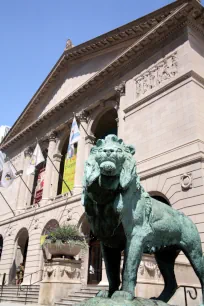
The building
The exterior of the Art Institute is one of the most photographed landmarks in Chicago. The two huge lions that greet visitors at the entrance to the museum were designed and crafted by sculptor Edward Kemeys in 1894 and attract as much attention today as they did more than a century ago.
Founded in 1879 as both a school and museum, the building that originally housed the Art Institute of Chicago was built atop rubble from the great Chicago fire.
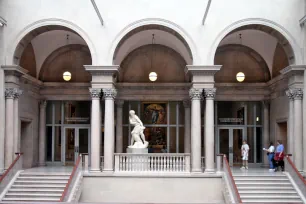
By the 1890s, however, with the impending 1893 World Columbian Exhibition scheduled to take place in Chicago, trustees of the museum and school saw fit to recommend a new building and site. Thus, in 1893, the magnificent Beaux-Arts building that now houses the art institute was opened.
Designed by the Boston firm of Shepley, Rutan and Coolidge, the building has been earning accolades ever since its inception.

The Museum Collection
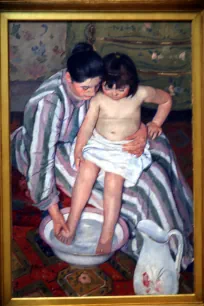
The permanent collection inside the Art Institute of Chicago is so extensive that it’ll take you several hours to explore the whole thing.
The museum’s collection of Impressionist Art is certainly one of the finest in the country, and lovers of Claude Monet will be especially thrilled. Also highly acclaimed is the Art Institute’s exhibit of contemporary American and European works in the Modern Wing, where you’ll find stunning works by Andy Warhol, Jackson Pollock, Pablo Picasso, and Henri Matisse.
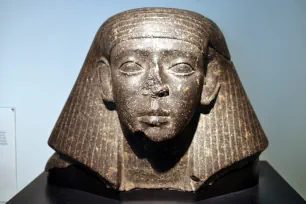
If those don’t pique your interest, consider the Arms and Armor exhibit, spanning four centuries; exquisite European decorative arts; the museum’s celebrated photography collection; or the Asian exhibits, featuring five thousand years of art work from China, Korea, Japan, India, southwest Asia, and the Near and Middle East. There are also galleries with Roman, Greek and Egyptian artifacts as well as a gallery with a fine collection of African Art.
If you’ve got kids in tow, head to the Kraft Education Center for some interactive fun, something you don’t often find in the world’s stuffy art museums.
For your convenience, there’s also a full-service restaurant, a cafeteria, and in the summer, an outdoor café. Take some time to visit the large gift shop, full of treasures from around the world.
Expansion
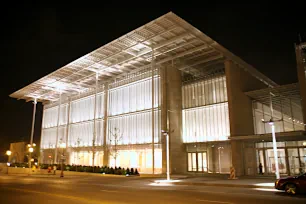
In May 2009 a new, 274,000 sq. ft. (25,460 sq. m.) large wing was added to the museum. Designed by renowned architect Renzo Piano – also known for his work on the Centre Pompidou in Paris, the modern extension houses the museum’s collections of modern European painting and sculpture, architecture, photography and contemporary art. Here you’ll find works from famous artists such as Kandinsky and Piet Mondriaan.
The expansion also added an interior garden and new amenities such as a new museum shop, café and restaurant. An open air sculpture terrace offers great views over Millennium Park. The third floor of the new wing is connected to the park across Monroe Street by the Nichols Bridgeway, a pedestrian overpass. The modern bridge was also designed by Renzo Piano’s workshop.
- Next: Lincoln Park
- More Sights & Attractions in Chicago