


This newer waterfront development has become a landmark for those exploring the Boston harbor area.
History of Rowes Wharf
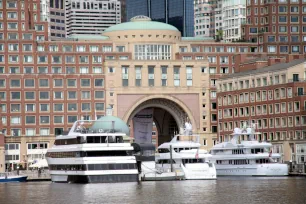
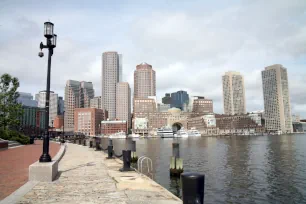
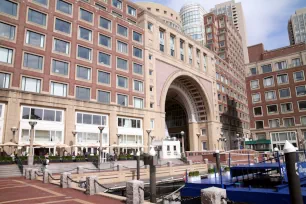
The area where the modern Rowes Wharf development is now situated was once a neighborhood known as the South Battery, established by Boston’s earliest settlers in the seventeenth century.
Boston merchant and property developer John Rowe bought the land in 1764 and built the very first Rowes Wharf at that location, which extended slightly into the Boston Harbor. It was used mainly for industrial water traffic.
The area continued to be quite vibrant for at least a century, especially in the late 1800s when it was connected to the rest of the city via railroad, ferry, and elevated train. However, when those connections ceased by the mid-twentieth century, the area became run-down and undesirable and, due to changes in shipping habits, rarely saw any commercial traffic.
The New Rowes Wharf
Today, Rowes Wharf is a 5.38-acre (2 ha.) site located in the city’s Seaport District. The centerpiece of the area is a 345,000 square foot (32,000 sq. m.) building which has become known as “the Gateway to Boston”. Completed in 1987, the structure stands 182 feet (55 meters) high and contains 16 stories. This attractive building houses the 230-room four-star Boston Harbor Hotel, 100 luxury condominiums and essential marine facilities.
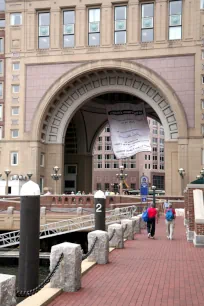
According to its designer, Adrian Smith of Skidmore, Owings, and Merrill, the Rowes Wharf building is “a steel deck and beam frame clad with a curtain wall of brick, granite and pre-cast concrete”. Its courtyard, which covers a public plaza leading to the waterfront, is topped by grand arches, and a copper-domed observatory sits atop the building, providing panoramic views of the city. There’s also a free-floating stage which is often the site of concerts and other special public events, especially during the warm summer months.
Water Transport
Rowes Wharf is one of the starting points for the water taxis that provide a great alternative means of transportation. About thirty docks across the Boston Harbor are served, including Logan Airport. Some cruises and commuter boat services also leave from Rowes Wharf to various destinations.
- Next: Copley Square
- More Sights & Attractions in Boston